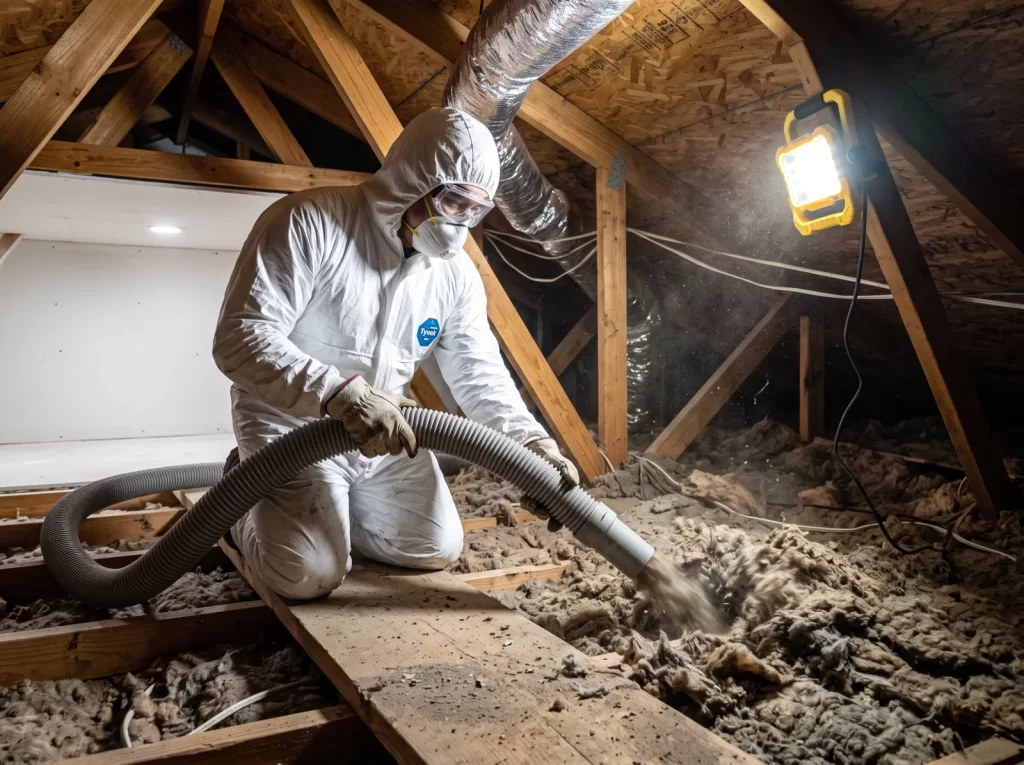
Pests, water, mold, or old age can turn attic insulation from an asset into a liability.
Your attic insulation works quietly out of sight, so it is easy to forget about until a problem forces you into the attic. Pests, water, mold, or simply old age can turn that insulation from an asset into a liability. When that happens, attic insulation removal clears out the damaged material so you can start fresh with a clean, efficient system built for the Rio Grande Valley heat.
This guide covers when attic insulation removal is needed, exactly how the process works, what it typically costs, and why re-insulating afterward is the step that pays you back on your AEP Texas or Magic Valley Electric bill.
Key takeaways
- Clean, dry, even insulation can usually be topped up instead of removed.
- Blown-in is vacuumed out; batts are bagged and carried by hand.
- Most Valley attics are cleared in a single day.
- An empty attic offers no protection. Re-insulate to R-30 to R-49.
When do you need attic insulation removal?
Not every attic needs its insulation removed. If your existing insulation is clean, dry, and evenly spread, you can often add more on top. Removal becomes the right call when the material is damaged or contaminated. Here are the most common triggers.
- Rodent or pest infestation. Attics are prime real estate for rodents. Once mice, rats, or squirrels move in, they flatten the insulation and leave behind droppings and urine. That contamination lowers the R-value and creates a health concern. Soiled insulation cannot be cleaned in place, so removal and sanitizing are the safe path forward.
- Water damage from leaks. A roof leak, a burst pipe, or a tropical storm can soak attic insulation. Wet insulation loses its ability to slow heat and can stay damp for a long time in the humid Valley air, which invites mold. This comes up often across the RGV after hurricane season.
- Mold and moisture problems. In the humid Valley climate, a damp attic can grow mold quickly. Moldy insulation is both an efficiency and a health issue, and mold rarely stays contained. Removal, treatment, and fixing the moisture source go hand in hand.
- Smoke or fire damage. Smoke works its way into attic insulation and leaves a stubborn odor and soot residue that fresh air will not clear. Removing the affected material is the practical way to get rid of the smell for good.
- Old, settled, or uneven material. Over the years, insulation settles and compresses, which reduces its R-value. If your Valley attic has a thin, uneven, or degraded layer, removing it gives you a clean, consistent base rather than piling new material over old, tired insulation.
- Upgrading to spray foam. If you are switching to spray foam, the old insulation usually has to come out so the foam can bond to clean framing and decking and perform as designed. This is a popular upgrade in the RGV, where air sealing and humidity control make a big difference.
What is the attic insulation removal process?
A professional removal is quicker and far cleaner than doing it yourself. Here is what to expect.
- 01 Inspection. The crew evaluates the type and condition of your insulation and checks for pests, moisture, and mold, along with the source of any damage.
- 02 Protection. They cover the path from the attic to the exit so your home stays clean throughout.
- 03 Removal. Blown-in insulation is vacuumed out with a large commercial machine, while batts are bagged and carried out by hand.
- 04 Sanitizing. The attic is cleaned and treated as needed to handle droppings, mold, or odor.
- 05 Disposal. The old material is bagged and hauled away for proper disposal.
- 06 Prep. Air leaks and pest entry points are sealed so the space is ready for a fresh install.
Most Valley attics can be cleared in a single day. Heavily contaminated or hard-to-access spaces may take longer.
How much does attic insulation removal cost?
Cost depends on several factors, so any figure here is an estimate. The main drivers are:
- Attic size. More square footage means more material to remove.
- Insulation type. Blown-in vacuums out efficiently, while batts are removed by hand.
- Level of contamination. Pest, water, or mold damage adds cleaning and disposal work, which is common in humid RGV attics.
- Accessibility. A tight, low, or awkward attic takes more time and effort, and the extreme Valley attic heat slows the work.
Because these variables swing the price so much, the honest answer is that a quote depends on the job. The best way to get a real number is a free in-home estimate, where a local Valley crew can see your attic and price the work accurately instead of guessing.
Should you DIY attic insulation removal?
We do not recommend it. Attic work means high heat, tight quarters, and the risk of stepping through a ceiling. In a Valley summer an attic can top 130 to 150 degrees, which makes DIY removal genuinely dangerous. Contaminated insulation adds health hazards from droppings, mold, or soot. Professionals bring commercial vacuums, protective gear, and safe disposal, and they finish in a fraction of the time while keeping your home clean.
Do not stop at removal: re-insulate
Removal solves the problem, but an empty attic offers no protection from the Valley heat. The real payoff comes when you re-insulate with a proper, full-depth system. Most RGV attics should be brought up to roughly R-30 to R-49 for the best comfort and lowest bills. With the old material gone and the attic prepped, this is the ideal moment to:
- Seal air leaks. Around top plates, penetrations, and can lights.
- Choose the right material. Blown-in, spray foam, or a combination, matched to your home.
- Add a radiant barrier. To reflect the intense South Texas sun.
- Hit a modern R-value. Bring your attic up to the recommended level for the Valley climate.
Removal and re-insulation together turn a problem attic into an efficient one.
Frequently asked questions
How do I know if my attic insulation needs to be removed?
Look for droppings, water stains, a musty or smoky smell, visible mold, or insulation that looks flattened and gray. Any of these, or a recent spike in your electric bill, is a reason to have the attic inspected.
Can I add new insulation without removing the old?
Yes, if the existing insulation is clean, dry, and even. But if it is contaminated, wet, moldy, or you are moving to spray foam, the old material should be removed first.
How long does attic insulation removal take?
Most Valley attics are cleared in a day. Larger or heavily contaminated spaces can take longer.
What does attic insulation removal cost?
It varies with attic size, insulation type, contamination, and access, so a quote depends on the job. A free in-home estimate gives you an accurate price.
Should I re-insulate right after removal?
Yes. An empty attic offers no protection from the Valley heat. Re-insulating to a proper R-value is what delivers the comfort and energy savings.
Related reading and services
- Service: Attic insulation removal service in the RGV
- Service: Attic insulation installation
- Cornerstone: Choosing new attic insulation for the Valley
- Blog: Insulation Removal: When and Why It Is Necessary
- Blog: How Much Does Attic Insulation Cost in the RGV?
- Blog: Insulation and Mold: Controlling Humidity in the Valley