Attic insulation and radiant barrier in the Rio Grande Valley
Bring a thin attic up to full depth, seal the leaks and reflect roof heat with a radiant barrier. The biggest fix for a hot Valley house.
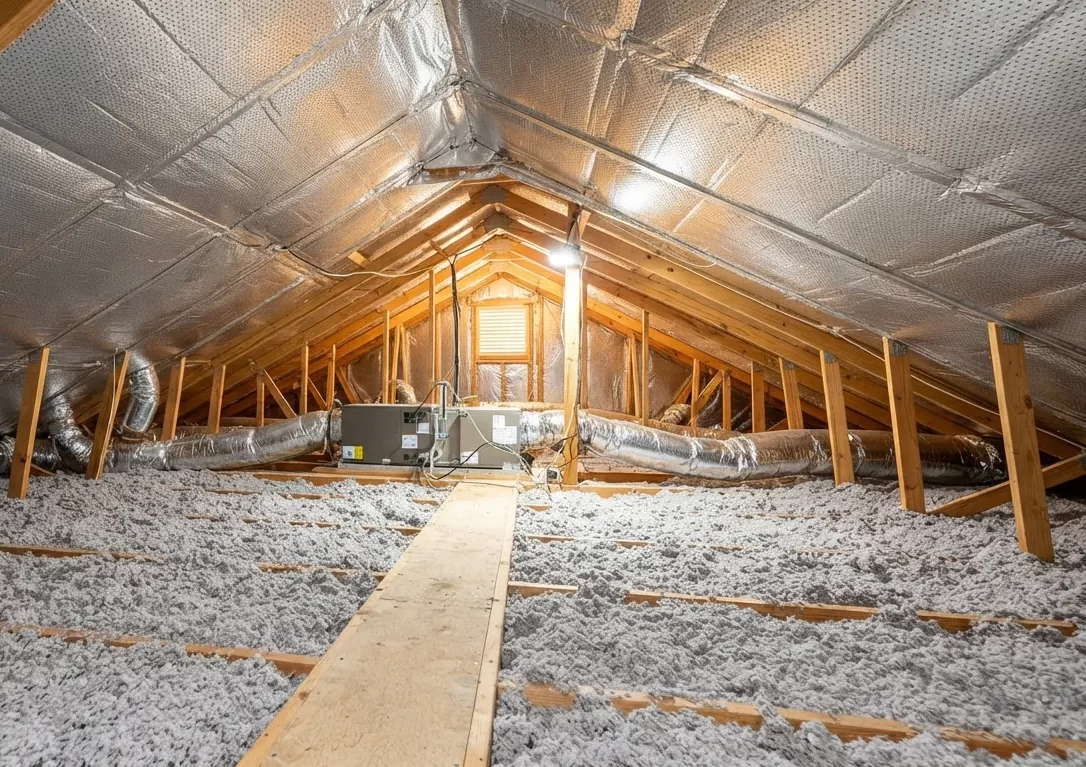
The attic is where a Valley house gains most of its heat
Cooling season here runs roughly March through November. On a sunny afternoon the attic can reach 130 to 150 degrees, much hotter than the air outside, and that heat pushes down through the ceiling into every room. Thin or settled insulation lets it through, and the AC runs to keep up.
Most Valley homes sit on a slab, so there is no crawl space to insulate. That makes the attic the main place to fix. We bring the insulation up to a full, even depth, seal the air leaks around can lights, top plates and pipe holes, and add a radiant barrier where it makes sense. Mobile and manufactured homes are built differently, often with a shallow roof cavity, so we look at those first and explain what is practical.
A radiant barrier is a reflective foil that turns back the heat coming off a hot roof deck before it reaches the insulation. In a hot, sunny climate like ours, that is worth doing. Our crew is bilingual, so hablamos español if that is easier for your family.
- Attic insulation topped up or installed to a full, even depth
- Radiant barrier stapled under the rafters, not laid on the insulation
- Air sealing at can lights, top plates, pipe holes and the attic hatch
- Baffles at the eaves so soffit vents keep moving air
- Free inspection and a written price before any work begins
- Licensed and Insured
How much attic insulation a Valley home needs
The Rio Grande Valley is in climate zone 2, hot and humid. For zone 2, ENERGY STAR recommends adding R-49 to an attic with no insulation, and adding R-38 to an attic that already has 3 to 4 inches. Many older homes here fall short of that, and the material that is there has often packed down over the years.
| Insulation alone | Insulation plus radiant barrier | |
|---|---|---|
| What it does | Slows heat moving through the ceiling | Also reflects heat coming off the roof deck |
| Where it goes | On the attic floor | Insulation on the floor, foil under the rafters |
| Best fit | Attics with thin or settled insulation | Hot attics, ducts in the attic, sunny roofs |
| Upkeep | Check the depth now and then | Same, and keep the foil free of heavy dust |
The Department of Energy notes that some studies show a radiant barrier can cut cooling costs 5 to 10 percent in a warm, sunny climate. It also warns against laying foil directly on top of attic floor insulation, where dust collects and moisture can be trapped, so we install it on the rafters. For more detail, read our attic insulation guide for the RGV and radiant barrier vs spray foam.
Homes that gain the most from attic work
Visible ceiling joists
If you can see the tops of the joists, the attic is short on insulation and a top up makes a clear difference.
Ducts in the attic
Most Valley homes run ducts through the attic. A radiant barrier keeps the space around them cooler.
Hot back bedrooms
Rooms under a low roof or facing west often have the thinnest insulation above them.
Rentals between tenants
An empty house is the easiest time to top up the attic and seal leaks.
When to skip it: if the existing insulation is wet, moldy or full of droppings, adding more on top traps the problem. In that case removal and replacement comes first.
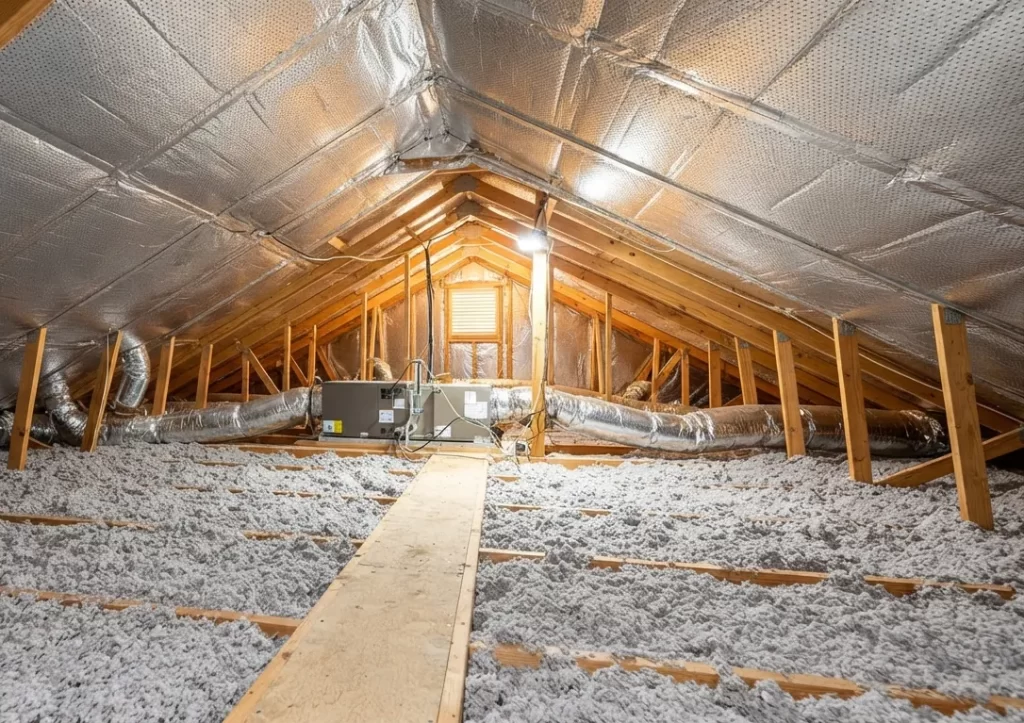
What an attic job looks like
Look and measure
We check the depth and condition of what is there, the vents, the ducts and any sign of roof leaks.
Estimate in writing
Target R-value, radiant barrier if it fits, and the air sealing included, listed clearly.
Seal and prep
We seal the leaks, set baffles at the eaves and install the radiant barrier on the rafters.
Insulate and tidy
Insulation goes in to the target depth, depth markers go up, and we clean up on the way out.
What attic insulation costs
The price depends on the size of the attic, how much insulation is already there, the R-value you are aiming for, and whether a radiant barrier and air sealing are part of the job. Low roofs, tight framing and a crowded attic take longer to work in. If old material has to come out first, that is priced separately.
Every job gets a written price after a free inspection. Our page on what affects insulation cost explains what to compare between quotes, and attic insulation cost in the RGV covers attic jobs in more detail.
Attic insulation questions
How do I know if my attic needs more insulation?
- You can see the tops of the ceiling joists.
- The insulation looks thin, flat, patchy or dark with dust.
- Upstairs or back rooms stay hot no matter what the thermostat says.
Is a radiant barrier worth it in the Valley?
- Usually, yes. Our sun and long cooling season are the conditions where it helps most.
- It works alongside insulation, not in place of it.
Can you add over my existing insulation?
- Often, yes, and it costs less than starting over.
- We only recommend removal when the old material is wet, moldy, contaminated or too matted to build on.
Does attic insulation help with humidity?
- Air sealing does most of that work by keeping damp air out of the house.
- Read insulation and mold in the Valley for more.
How long does it take?
- Most attics are done in a day, including the radiant barrier.
More Insulation Services and Guides You’ll Love
Get a free attic insulation estimate
Prefer to talk? Call us and we will set up your free inspection. Hablamos español.