Your attic is the single most important place to insulate in a Rio Grande Valley home.
Your attic is the single most important place to insulate in a Rio Grande Valley home. Summer attic temperatures climb to 130 to 150 degrees, and all that heat presses down on your living space and drives up cooling bills. The right attic insulation, at the right R-value, keeps that heat where it belongs and makes your home more comfortable and affordable to run.
This complete guide covers the types of attic insulation, the R-value you should target, the warning signs that yours needs attention, the benefits you can expect, and what the install process looks like.
Key takeaways
- The RGV is DOE Zone 2: target roughly R-30 to R-49, often R-38 or higher.
- Older Valley homes are often down at R-19 or below.
- Attic insulation works best paired with air sealing and a radiant barrier.
- Most attic projects finish in a single day.
Why attic insulation matters most in the Valley
Heat moves from hot to cold. In a Valley summer, that means heat pouring down from a superheated attic into your air-conditioned rooms. A well-insulated attic slows that transfer, so your AC does not have to fight as hard against the deep South Texas sun.
Attic insulation works best when it is paired with air sealing and, in our intense sun, a radiant barrier. Sealing leaks at top plates, penetrations, and can lights stops hot, humid air from sneaking in, and then the insulation does its job of slowing heat flow. Together they cut cooling costs, even out room temperatures, and help control humidity and moisture. In our climate, the attic is where insulation pays off the fastest.
What R-value does a Valley attic need?
R-value measures resistance to heat flow, and higher is better. The Rio Grande Valley sits in DOE climate Zone 2, where recommended attic levels are roughly R-30 to R-49, and many homeowners go R-38 or higher for stronger comfort and savings.
Where you land in that range depends on your home, your comfort goals, and your current insulation. Older Valley homes often have far less than R-38, sometimes settled down to R-19 or below, which leaves a lot of savings on the table. Topping up to R-38 or higher is one of the most cost-effective upgrades you can make against high AEP Texas and Magic Valley Electric bills.
What are the types of attic insulation?
Several materials work well in Valley attics. Each has its own strengths.
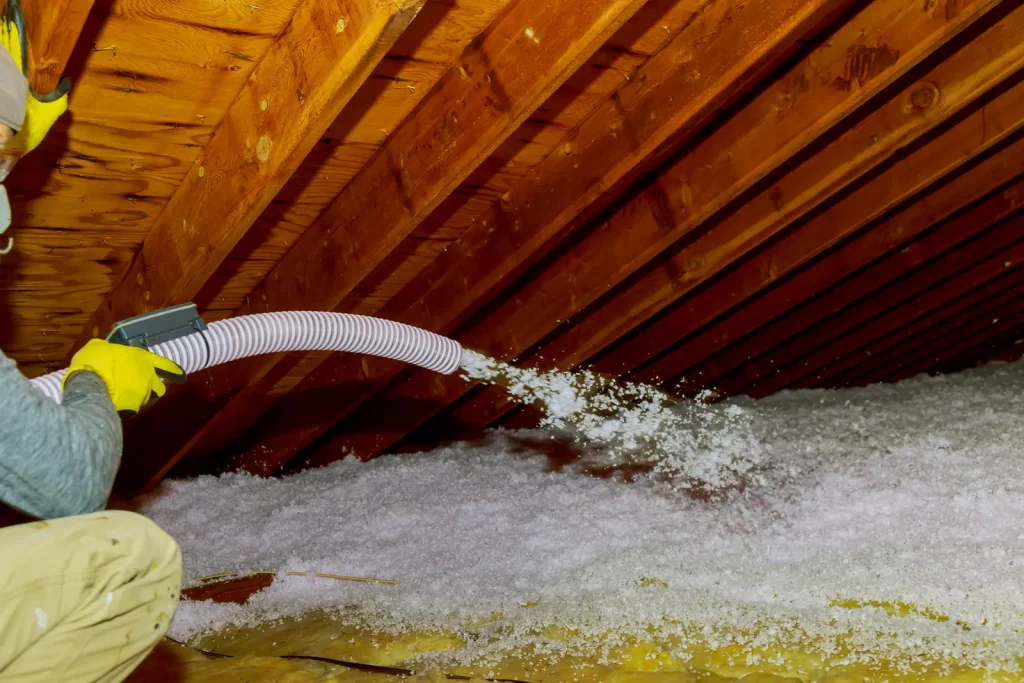
- Blown-in. Loose-fill cellulose or fiberglass is blown into the attic to form a thick, even blanket. Cellulose delivers about R-3.2 to R-3.8 per inch and fiberglass about R-2.2 to R-2.7 per inch. Excellent for attics and for topping up existing insulation because it fills gaps and flows around obstructions.
- Batt and fiberglass. Rolls laid between joists. A familiar, budget-friendly option that works well when the attic floor is open and evenly spaced. They can leave gaps around irregular framing if not fitted carefully.
- Spray foam. Open-cell and closed-cell foam seal air and insulate in one step. Open-cell gives about R-3.5 to R-3.8 per inch, closed-cell about R-6 to R-7 per inch. Popular in the Valley for its air sealing and high R-value per inch, and it can be applied to the attic floor or the underside of the roof deck to create a conditioned attic. Closed-cell also adds a moisture barrier for our humidity.
- Radiant barrier. Reflects radiant heat away from the attic. Not a substitute for insulation, but under the relentless Valley sun it is one of the most effective add-ons you can pair with insulation to cut attic heat gain.
Signs your attic insulation needs attention
- Rising bills. High or climbing electric bills, especially in summer.
- Uneven temperatures. Rooms that are hot upstairs and cool downstairs, or uneven from room to room.
- Drafts. A home that struggles to hold a set temperature.
- Visible thinning. Old, thin, matted, or settled insulation you can see below the joists.
- Pests or water. Evidence of rodents, pests, or water damage in the attic.
- Moisture. Mildew smell or staining on attic surfaces.
If you spot any of these, an attic inspection is worth booking. Damaged or contaminated insulation may need removal and replacement rather than a simple top-up.
Benefits of upgrading attic insulation
- Lower electric bills. Slowing heat transfer means your AC runs less. Savings vary by home, so we describe them as estimates.
- More even comfort. Fewer hot and cold spots from room to room and floor to floor.
- Humidity control. Air sealing and the right insulation help manage the humid Valley air and lower the risk of mold.
- Quieter home. Many insulation types dampen outside noise.
- Protects your HVAC. Less strain on the system can mean fewer repairs over time, which matters when your AC runs most of the year.
What does the attic insulation process look like?
Here is what to expect when you work with a professional crew.
- 01 Free estimate. We inspect your attic, measure current insulation, check for air leaks and any damage, and recommend a material and R-value target.
- 02 Prep. We protect your floors and work areas and set up access.
- 03 Removal if needed. If existing insulation is contaminated by pests, water, or mold, we remove and dispose of it and sanitize the space before new insulation goes in.
- 04 Air sealing. We seal leaks at top plates, penetrations, and can lights so the new insulation performs.
- 05 Installation. We install your chosen insulation to the target R-value, filling gaps for even coverage, and can add a radiant barrier if it fits your home.
- 06 Cleanup. We leave the space clean and review the finished work with you.
A clean, respectful install is standard. We are licensed and insured and back our work with a workmanship warranty.
Frequently asked questions
What R-value should attic insulation be in the Valley?
Most RGV homes should target roughly R-30 to R-49, and many go R-38 or higher, which lines up with DOE Zone 2 guidance. The right level depends on your home and comfort goals, and we confirm it during a free estimate.
How do I know if my attic needs more insulation?
Watch for high summer bills, uneven room temperatures, drafts, and old or settled insulation sitting below the joists. Signs of pests, water, or mold are reasons to inspect and possibly remove and replace.
Can I add new attic insulation over old insulation?
Often yes. Blown-in insulation is great for topping up existing material to a higher R-value. If the old insulation is contaminated or damaged, it should be removed first.
What is the best type of attic insulation for the Valley?
It depends on your attic and budget. Blown-in is popular and cost-effective for topping up, while spray foam adds air sealing and high R-value per inch, and a radiant barrier fights our intense sun. We can compare options on your free quote.
How long does an attic insulation job take?
Many attic projects are completed in a single day, though larger homes or jobs that require removal first can take longer. We give you a timeline with your estimate.
Related reading and services
- Service: Attic insulation and radiant barrier
- Cornerstone: Best Insulation for the RGV: Types Compared
- Blog: How Much Does Attic Insulation Cost in the RGV?
- Blog: R-Value Explained for RGV Homes
- Blog: 7 Signs Your Valley Home Needs New Insulation