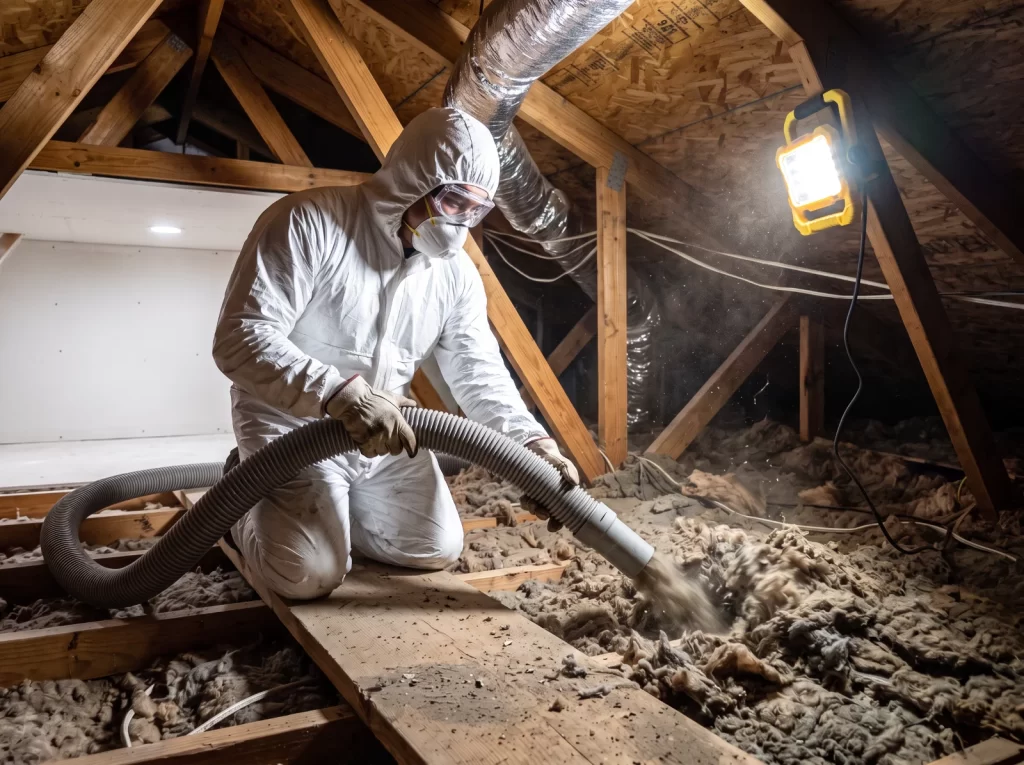
Old, damaged, or contaminated insulation does more than sit there. Sometimes the smartest move is to start fresh.
Most Rio Grande Valley homeowners never think about the insulation in their attic or walls until something goes wrong. Old, damaged, or contaminated insulation does more than sit there. It can hold moisture, harbor pests, spread odors, and quietly drive up your AEP Texas or Magic Valley Electric bill. In many cases, the smartest move is to remove the old material completely and start fresh.
This guide explains when insulation removal is necessary, why it matters for your home and your health, and what to expect from the process. If you are dealing with any of the problems below, removal is often the first step toward a cooler, cleaner, more efficient Valley home.
Key takeaways
- Insulation lasts decades. Removal is about damage, not a schedule.
- Pest, water, mold, and smoke damage all call for full removal.
- Spray foam needs to bond to clean framing, so the old layer comes out.
- Most Valley attics can be cleared in a day. Do not DIY it in 140-degree heat.
When is insulation removal necessary?
Insulation is built to last for decades, so it does not need to be replaced on a schedule. Removal becomes necessary when the material is damaged, contaminated, or no longer doing its job. Here are the most common reasons RGV homeowners call for insulation removal.
- Rodent and pest damage. Rodents love attic insulation. It is warm, soft, and hidden. Mice, rats, and squirrels tunnel through it, flatten it, and leave behind urine and droppings. Once insulation is soiled by pests, it loses much of its R-value and can carry bacteria and a lingering smell. Compressed and contaminated insulation cannot be cleaned in place, so removal is the safe choice.
- Water damage. A roof leak, a burst pipe, or a Gulf storm can soak your insulation. Wet fiberglass and cellulose lose their ability to slow heat flow, and in the humid Valley air they stay damp for a long time in an enclosed attic. Waterlogged insulation is heavy, ineffective, and a breeding ground for mold. A common problem after hurricane season and heavy tropical downpours.
- Mold and mildew. The Valley is hot and humid for most of the year, and attics trap that tropical moisture. When insulation stays damp, mold and mildew can take hold. Moldy insulation is both an efficiency problem and a health concern, especially for anyone in the home with allergies or breathing issues.
- Smoke and fire damage. Even a small fire can send smoke through your attic and into the insulation, where the odor settles in and stays. Smoke-damaged insulation holds soot and a persistent burnt smell that fresh air will not clear.
- Old and settled material. Older insulation can settle and compress over the years, which lowers its R-value. Many older Valley homes, especially in established neighborhoods around McAllen, Brownsville, and Harlingen, have far less insulation than modern DOE Zone 2 recommendations of roughly R-30 to R-49 in the attic. Sometimes new insulation can be added on top. Other times, removing it first gives you a clean, consistent base.
- Before a spray foam upgrade. If you are switching to spray foam, the old insulation usually has to come out first. Spray foam needs to bond to clean framing and decking to seal and perform correctly.
Why removing bad insulation matters
It is tempting to leave old insulation in place and simply add more on top. That works in some cases, but not when the existing material is damaged. Here is why removal is worth it.
- Efficiency. Compressed, wet, or soiled insulation does not slow heat flow well, so your AC works harder and your electric bill climbs through the long Valley cooling season.
- Health and air quality. Droppings, mold spores, and smoke residue can affect the air you breathe. Removing the source protects your household.
- Odor. Pest and smoke smells will not go away on their own. Taking out the contaminated material is the only way to truly clear them.
- A clean start. New insulation performs best over a clean, dry, properly prepared surface.
What does the insulation removal process look like?
A professional insulation removal is faster and cleaner than most homeowners expect. While every job is a little different, the process usually follows these steps.
- 01 Inspection. A crew assesses the type and condition of your insulation, checks for pests, moisture, and mold, and looks for the source of any damage.
- 02 Setup. They lay down protective coverings along the path from the attic to the exit so your home stays clean.
- 03 Removal. Blown-in insulation is typically vacuumed out with a large commercial machine, while batts are bagged and carried out by hand.
- 04 Sanitizing. The space is cleaned and treated as needed to address droppings, mold, or odor.
- 05 Disposal. The old material is bagged and hauled away for proper disposal.
- 06 Prep. Entry points get sealed, air leaks are addressed, and the attic is made ready for a fresh install.
Most Valley attics can be cleared in a day, though heavily contaminated spaces can take longer.
Is insulation removal safe to DIY?
We do not recommend it. Attic work means tight spaces, extreme Valley heat, and the risk of stepping through a ceiling. In summer an RGV attic can top 130 to 150 degrees, which makes the work dangerous fast. Add contaminated material like droppings, mold, or soot, and the health risks go up. A professional crew brings the right gear, protects your home, and gets the job done in a fraction of the time.
How much does insulation removal cost?
Cost depends on the size of the space, the type of insulation, how much contamination is present, and how easy the attic is to access. Because every home is different, the honest answer is that a quote depends on the job. These are estimates, not guarantees. The best way to get an accurate number is a free in-home estimate, where a local Valley crew can see the space and give you a real price rather than a guess.
Frequently asked questions
How do I know if my insulation needs to be removed?
Watch for signs of pests, water stains, a musty or smoky smell, visible mold, or insulation that looks flattened and gray. If you notice any of these, or if your electric bills have crept up, it is worth having the attic inspected.
Can I just add new insulation on top of the old?
Sometimes, if the existing insulation is clean and dry. But if it is wet, moldy, pest-soiled, or you are upgrading to spray foam, the old material needs to come out first for the best results.
How long does insulation removal take?
Most Valley attic removals are completed in a day. Larger homes or heavily contaminated spaces may take longer.
Does removing insulation get rid of the smell?
Yes. When odor comes from pests, smoke, or mold, removing the contaminated insulation and sanitizing the space is the reliable way to clear it.
Will my energy bills improve after removal and re-insulation?
Replacing damaged insulation with a proper, full-depth install helps your home hold conditioned air, which can lower cooling costs during the Valley’s long summer.
Related reading and services
- Service: Professional insulation removal in the RGV
- Cornerstone: Compare insulation types for the Valley
- Blog: Attic Insulation Removal: Process, Cost, and Timing
- Blog: 7 Signs Your Valley Home Needs New Insulation
- Blog: Insulation and Mold: Controlling Humidity in the Valley