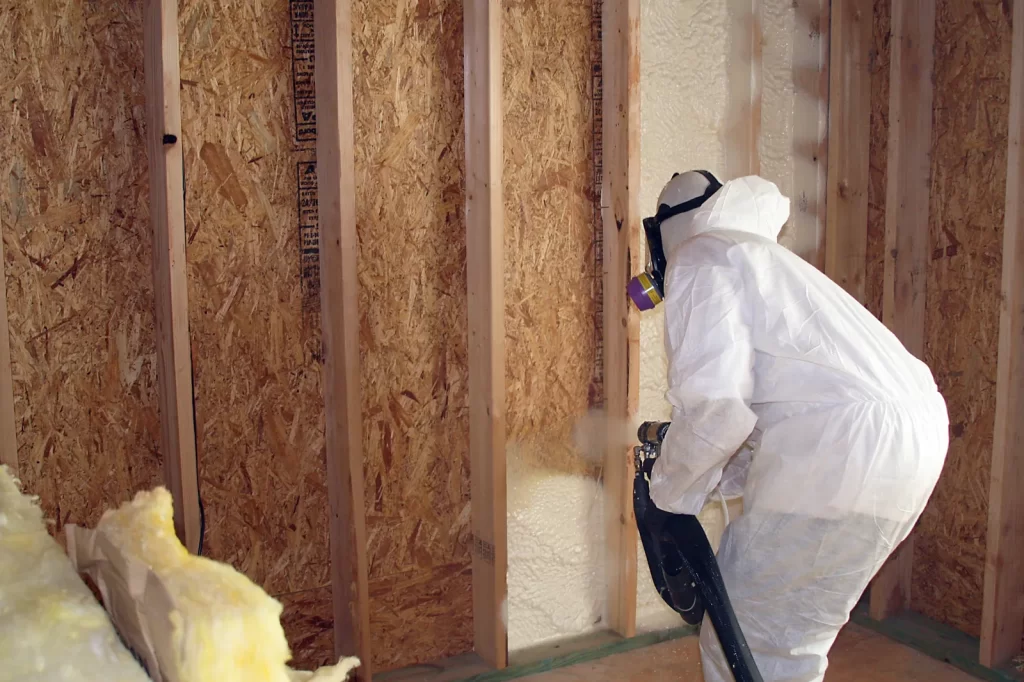
You do not have to tear off drywall to fix an empty wall cavity.
Attics get most of the attention, but your walls matter too. In many older Rio Grande Valley homes, the exterior walls have little or no insulation, which means hot summer air pours in and your cooled air slips out. If certain rooms always feel warmer than the rest of the house, or your walls feel hot to the touch on a July afternoon in McAllen or Brownsville, poor wall insulation is often the culprit.
The good news is you do not have to tear off drywall to fix it. This guide covers your wall insulation options for existing Valley homes, how each method works, and what you can expect to pay.
Key takeaways
- DOE Zone 2 wall recommendations fall in the R-13 to R-21 range.
- Drill-and-fill adds insulation through small patched holes, no demolition.
- Injection foam costs more but adds air sealing to the cavity.
- Batts only make sense when the wall is open: new builds, additions, gut remodels.
Why wall insulation matters in the Valley
Walls make up a huge share of your home’s exterior surface. When they are empty or underinsulated, they let heat move freely between inside and outside. In our subtropical climate, that means your air conditioner runs longer, your AEP Texas or Magic Valley Electric bill climbs, and rooms along exterior walls never feel quite comfortable.
For our region (DOE Zone 2), wall insulation recommendations generally fall in the range of R-13 to R-21. Many Valley homes built decades ago fall well short of that, or have insulation that has settled and left gaps. Adding wall insulation improves comfort, cuts cooling costs, and can even dampen outside noise.
How do you insulate existing walls without removing drywall?
For a finished home, the challenge is getting insulation inside a wall cavity that is already closed up behind drywall or siding. The most common solution is a method called drill-and-fill.
- Drill-and-fill. The crew drills a series of small holes into each wall cavity, either from the interior or the exterior, then blows or injects insulation through those holes. Once the cavity is filled, the holes are plugged and patched. From the outside, you would never know the work happened. It is far less invasive and less expensive than opening up walls.
- Injection foam. A type of drill-and-fill that uses a foam product rather than loose fill. The foam is injected as a liquid that expands to fill the cavity, working its way around wiring, pipes, and odd-shaped spaces. Once cured, it forms a continuous layer that both insulates and helps seal air leaks. Tends to cost more than loose-fill options.
- Blown-in wall insulation. Uses loose-fill cellulose or fiberglass, blown into the cavity through drilled holes under pressure so it packs in densely. Dense-packed cellulose is a popular choice because it fills gaps well, resists settling, and offers solid R-value at a reasonable price.
What about batts in new construction?
If you are building a new home or an addition, or if the walls are open during a major renovation, you have an easier path: batt insulation. With so much new construction going up across the Valley, this is a common scenario.
Fiberglass batts are pre-cut blankets that fit neatly between wall studs before the drywall goes up. They are affordable, widely available, and deliver R-13 to R-21 in typical wall assemblies. Because the wall is open, installers can place batts precisely and avoid gaps.
Batts only make sense when the wall cavity is accessible, so they are ideal for new builds, additions, and full remodels, but not for a finished wall you do not want to tear apart.
Wall insulation cost: what to expect
Wall insulation cost depends on your home’s size, wall construction, the method you choose, and how easy the walls are to access. Treat the following as rough estimates, not quotes. Your actual price depends on the job.
- Blown-in / drill-and-fill. Generally the most budget-friendly retrofit option, priced by the square footage of wall area treated.
- Injection foam. Typically costs more than loose fill because of the material and the air-sealing benefit it provides.
- Batts in new construction. Usually the lowest-cost option per square foot, since the walls are open and installation is straightforward. Batts often run lower than spray foam or dense-pack retrofits.
For context, spray foam runs roughly $1.50 to $4.50 per board foot, while other materials are typically lower. The only way to know your real number is a free in-home estimate, where we measure your walls and factor in access and existing conditions.
How do I know if my walls need insulation?
A few signs point to empty or failing wall insulation:
- Hot walls. Exterior walls feel hot to the touch on a Valley summer afternoon.
- Uncomfortable rooms. Rooms along outside walls are always the least comfortable.
- High bills. Your electric bills are high despite a decent attic.
- Noise. Outside noise comes through easily.
- Age. Your home was built before insulation was standard in your area.
A simple way to check is a small inspection. An installer can remove an outlet cover on an exterior wall and look into the cavity, or use an infrared camera to spot hot spots. If you are seeing several of these signs, it is worth having your walls checked.
Is wall insulation worth it?
For most underinsulated Valley homes, yes. Walls are a major path for heat gain, and closing that gap improves comfort in the rooms you actually live in. While attic insulation usually gives the biggest bang for the buck in our climate, wall insulation is often the next best upgrade, especially in older homes with empty cavities. Paired with air sealing, it can meaningfully lower your cooling costs over time.
Frequently asked questions
Can you add insulation to walls without removing drywall?
Yes. Drill-and-fill methods let installers add insulation through small holes drilled into each wall cavity, which are then patched. Injection foam and blown-in cellulose or fiberglass are both installed this way, so there is no need to tear off your drywall.
What is the best insulation for existing Valley walls?
Dense-packed blown-in cellulose and injection foam are both excellent for finished walls. Cellulose is cost-effective and fills gaps well, while injection foam adds air-sealing benefits at a higher price, which helps with our humidity. The best choice depends on your budget and your home’s construction.
How much does wall insulation cost?
It varies widely by home size, method, and wall access, so we always provide a written estimate. Loose-fill and drill-and-fill options are generally the most affordable retrofit, injection foam costs more, and batts in new construction are typically the lowest cost per square foot.
Will wall insulation lower my electric bills?
It can. Empty or thin wall insulation lets heat move freely, forcing your AC to work harder through our long cooling season. Filling those cavities slows heat transfer and, especially when combined with air sealing, helps reduce cooling costs and improve comfort.
Related reading and services
- Service: Batt, fiberglass, and wall insulation
- Service: Blown-in insulation
- Cornerstone: Best Insulation for the Rio Grande Valley
- Blog: Blown-In vs Batt Insulation
- Blog: R-Value Explained for RGV Homes
- Blog: Air Sealing vs Insulation