Insulation works quietly and out of sight. But your home usually tells you when it is failing.
Insulation does its work quietly and out of sight, so it is easy to forget about until something feels off. But your home usually tells you when its insulation is failing. Higher bills, rooms that never feel right, and drafts are all signals worth paying attention to, especially in the Rio Grande Valley heat where poor insulation costs you every summer.
Here are seven clear signs that your home may need new insulation, plus what to do about each one. If several of these sound familiar, a free in-home inspection is the smart next step.
Key takeaways
- A rising summer electric bill is the most common sign.
- Pest or moisture damage means removal, not a top-up.
- Insulation below the top of the joists is underperforming.
- A free inspection tells you whether to top up or replace.
Your electric bills keep climbing
The most common sign is a rising or stubbornly high electric bill, especially in summer. When insulation is thin, settled, or missing, your attic heat pours into your living space and your AC runs almost non-stop to keep up. In the Valley, where the cooling season runs most of the year, that shows up fast on your AEP Texas or Magic Valley Electric bill.
If your bills are higher than your neighbors’ or higher than they used to be for no clear reason, insulation is a likely culprit. Adding attic insulation to reach R-38 or higher often brings bills back down. Savings vary by home, so we describe them as estimates, but the attic is usually where the fastest payback lives.
Rooms are uneven, hot upstairs and cool downstairs
If one room bakes while another stays comfortable, or the upstairs is always warmer than the downstairs, uneven insulation is often to blame. Gaps, thin spots, and missing insulation let heat in unevenly, so your HVAC cannot keep the whole house at one temperature.
Even coverage matters. Blown-in insulation is good at filling gaps and flowing around obstructions, which helps smooth out those hot and cold spots. A professional can find the weak areas and bring them up to par.
You feel drafts, or the home will not hold a temperature
Drafts near walls, ceilings, and outlets are a sign that air is moving where it should not. Along with air leaks, missing or compressed insulation lets conditioned air escape and hot, humid outside air sneak in. The result is a home that never quite holds the temperature you set.
Insulation and air sealing work as a team here. Sealing leaks at top plates, penetrations, and can lights, then insulating properly, stops the drafts and lets your system keep up.
Your insulation is old, thin, matted, or settled
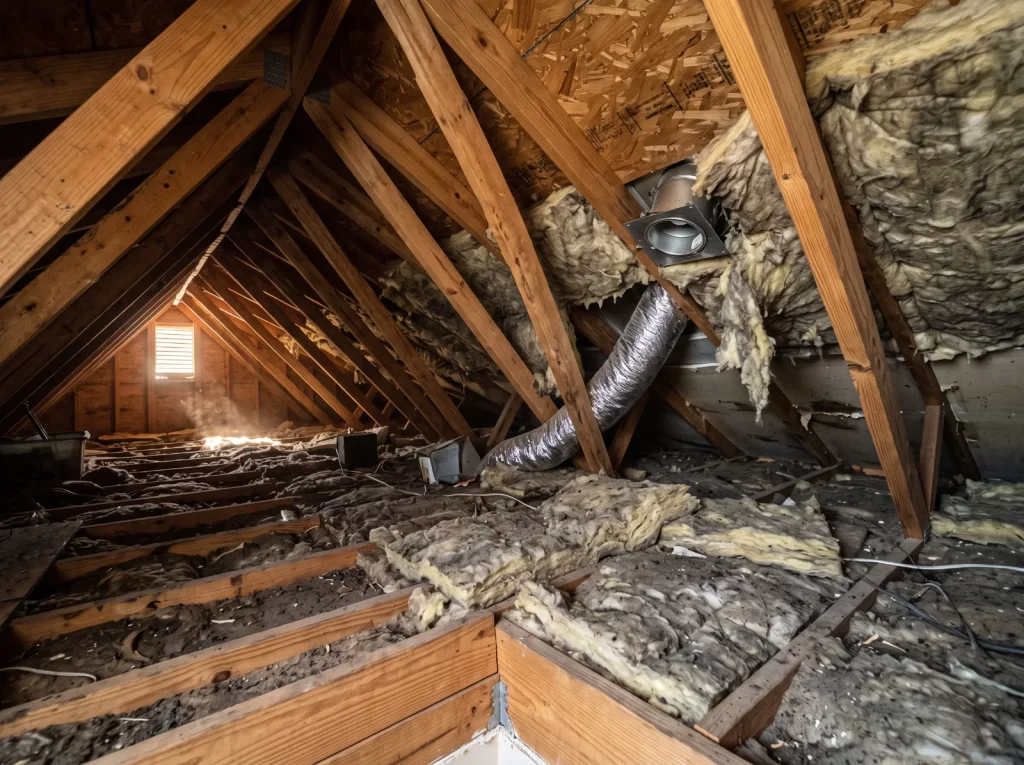
Insulation does not last forever. Over the years it can settle, compress, or degrade, which lowers its real R-value even if it looks like it is still there. If you climb into the attic and the insulation sits well below the top of the joists, is matted down, or looks thin and patchy, it is likely underperforming.
Many older Valley homes were built with far less insulation than today’s standards recommend. If yours has not been touched in decades, it is probably time for a top-up or replacement to reach modern R-value targets.
You see signs of pests or rodents
Rodents and pests love to nest in attic insulation. If you spot droppings, chewed material, nesting, or tunnels through the insulation, the material is likely contaminated and no longer doing its job.
Pest-damaged insulation usually needs to be removed, the space sanitized, and new insulation installed. This is not just about performance. It is about a cleaner, healthier home. Our insulation removal service handles the tear-out, disposal, and sanitizing before fresh insulation goes in.
You notice moisture, mold, or a musty smell
The Valley is humid, and tropical moisture off the Gulf is the enemy of both insulation and your home. Water stains, a musty or mildew smell, damp spots, or visible mold in the attic or on insulation are warning signs. Wet insulation loses much of its R-value and can spread moisture problems if it is left in place.
Moisture-damaged insulation should be removed and replaced, and the underlying moisture source addressed. In damp areas like pier-and-beam crawl spaces, closed-cell spray foam adds a moisture barrier along with its high R-value, which helps prevent the problem from returning. Given our humidity, moisture control deserves real attention here.
Your home is noisy or dusty
Insulation also dampens sound and helps limit dust and outdoor air infiltration. If your home has gotten noisier, or you notice more dust than usual, gaps and weak spots in your insulation and air sealing may be letting outside air and noise in. Upgrading insulation and sealing leaks can make your home quieter and cleaner alongside the comfort and energy benefits.
What to do if you see these signs
Spotting one of these signs does not always mean a full replacement. Sometimes a top-up is enough, and sometimes removal and replacement is the right call, especially with pest or moisture damage. Here is a simple path forward:
- 01 Book a free inspection. A professional checks your attic, measures current R-value, and looks for pests, moisture, and air leaks.
- 02 Remove if needed. Contaminated or water-damaged insulation is removed, disposed of, and the area sanitized.
- 03 Air seal. Leaks are sealed so the new insulation performs.
- 04 Insulate to target. New insulation is installed to reach R-38 or higher, recommended for Valley homes.
Frequently asked questions
How do I know if my home needs new insulation?
Watch for high electric bills, uneven room temperatures, drafts, old or settled insulation below the joists, pests, and moisture or mold. If several of these are present, book a free inspection.
How long does home insulation last?
Many types last decades, but insulation can settle, compress, or degrade over time, and pests or Valley moisture can ruin it sooner. If yours is old, thin, or damaged, it may need a top-up or replacement.
Does old insulation really raise my electric bills?
Yes. Settled or thin insulation has a lower real R-value, so more heat gets into your home and your AC works harder. Upgrading to recommended levels often lowers bills, though savings vary by home.
Do I need to remove old insulation or can I add to it?
If the existing insulation is clean and dry, you can often add blown-in on top to raise the R-value. If it is contaminated by pests, water, or mold, it should be removed and replaced.
Is moldy or wet insulation dangerous?
Wet or moldy insulation loses R-value and can spread moisture problems in your home. In our humid climate it should be removed and replaced, and the moisture source addressed, to protect comfort and indoor air.
Related reading and services
- Service: Insulation removal
- Service: Attic insulation
- Cornerstone: Best Insulation for the RGV: Types Compared
- Blog: Attic Insulation: The Complete RGV Homeowner’s Guide
- Blog: Insulation Removal: When and Why It Is Necessary
- Blog: Insulation and Mold: Controlling Humidity in the Valley