Both can do a great job. They install differently, cover differently, and shine in different places.
If you are insulating an attic, walls, or floors in a Rio Grande Valley home, two of the most common options are blown-in loose-fill and batt insulation. Both can do a great job, but they install differently, cover differently, and shine in different places. This guide compares blown-in and batt insulation head to head on coverage, R-value, cost, and best uses, so you can pick the right one for your project.
Costs mentioned here are estimates. The only way to know your price is a free in-home quote, because it always depends on the job.
Key takeaways
- Blown-in usually wins in attics because it fills gaps and flows around obstructions.
- Batts win in open, evenly spaced cavities like new-construction walls.
- Neither air seals on its own, so we often pair either with air sealing.
- Most RGV attics should target roughly R-38 or higher.
What is blown-in insulation?
Blown-in insulation, also called loose-fill, is made of small pieces of cellulose or fiberglass that a machine blows into place through a hose. It settles into a thick, even blanket that fills gaps and flows around wires, pipes, and framing.
- Cellulose. Delivers about R-3.2 to R-3.8 per inch.
- Fiberglass. Delivers about R-2.2 to R-2.7 per inch.
Blown-in is a favorite for Valley attics because it covers large, irregular spaces quickly and is excellent for topping up existing insulation.
What is batt insulation?
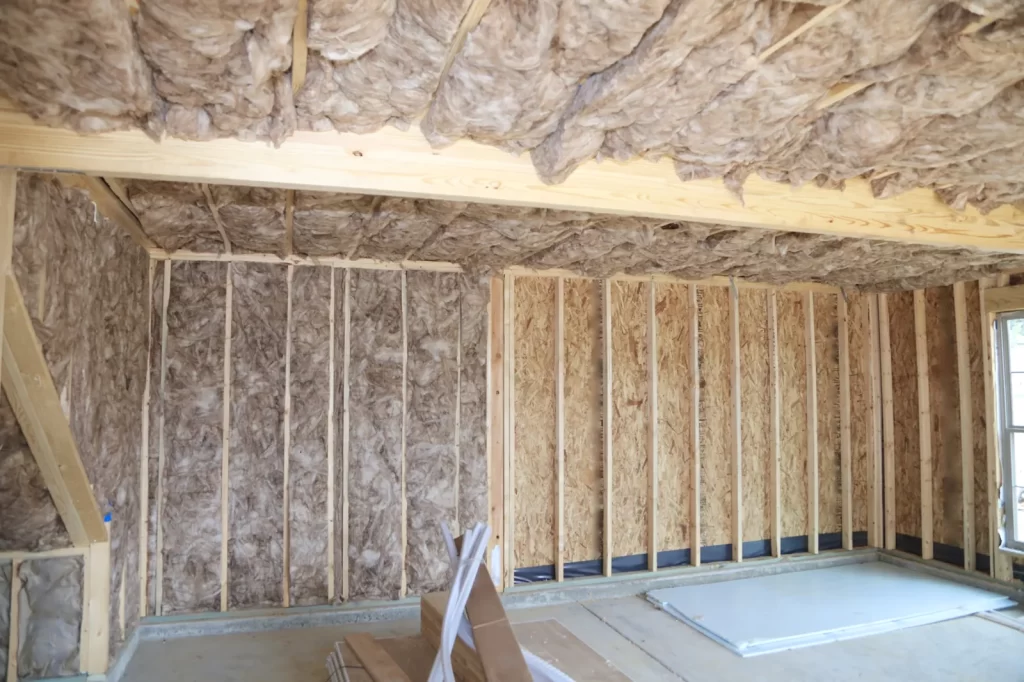
Batt insulation comes in pre-cut rolls or panels, most often fiberglass, that you place between studs, joists, and rafters. In walls, batts typically provide about R-13 to R-21.
Batts are a familiar, budget-friendly option and install well in open, evenly spaced cavities like new-construction walls and open attic floors. Their weakness is fit. Around wires, outlets, and irregular framing, batts can leave gaps that reduce performance if they are not cut and fitted carefully.
Blown-in vs batt insulation
| Feature | Blown-in (loose-fill) | Batt |
|---|---|---|
| Form | Loose fibers blown through a hose | Pre-cut rolls or panels |
| Materials | Cellulose or fiberglass | Usually fiberglass |
| R-value per inch | Cellulose R-3.2 to R-3.8; fiberglass R-2.2 to R-2.7 | Fiberglass, R-13 to R-21 in typical walls |
| Coverage | Fills gaps, flows around obstructions | Best in open, evenly spaced cavities |
| Best for | Attics, topping up, irregular spaces | New walls, open attic floors, standard framing |
| Air sealing | Reduces some airflow, not a true air seal | Does not air seal on its own |
| Cost (estimate) | Blown attic about $1.00 to $3.50 per sq ft | Often lower up front for simple layouts |
| DIY friendliness | Needs a blower, better for pros | Easier to handle but easy to fit poorly |
Coverage: which fills space better?
This is where blown-in usually wins. Because it is blown in as loose fill, it settles around framing, wiring, and penetrations and leaves fewer gaps. In an attic full of obstructions, that even coverage matters a lot, especially when you are fighting 130 to 150 degree attic heat.
Batts perform best when the cavity is clean, open, and sized to the batt. In a new wall with standard spacing, batts fit snugly and work well. In a cut-up attic or around lots of obstacles, batts require careful trimming, and any gaps or compressed spots lower the real R-value.
Cost: which is cheaper?
For simple, open layouts, batt insulation is often cheaper up front because the material is inexpensive and easy to place. For attics and top-ups, blown-in is very cost-effective and fast, generally around $1.00 to $3.50 per square foot installed as an estimate depending on material.
The bigger cost question is total performance. A cheaper batt job that leaves gaps may cost you more over time in higher AEP Texas and Magic Valley Electric bills. A well-installed blown-in attic that covers evenly can pay back through comfort and lower cooling costs. We help you weigh up-front price against long-term value on your free quote.
Best uses for each
- Choose blown-in when. You are insulating or topping up an attic; the space has lots of obstructions, wiring, or irregular framing; you want fast, even coverage over a large area; or you are adding R-value over existing, clean insulation.
- Choose batt when. You are insulating open, evenly spaced walls, often in new construction; the cavities are a standard size and easy to access; you want a straightforward, budget-friendly option for simple layouts; or you are insulating an open floor or ceiling with regular framing.
Many Valley homes use both, batts in the walls and blown-in in the attic. There is no single winner for every project.
Frequently asked questions
Is blown-in or batt insulation better for an attic?
Blown-in usually wins in attics because it fills gaps and flows around obstructions for even coverage, and it is ideal for topping up existing insulation. Batts can work in open, evenly framed attic floors.
Which is cheaper, blown-in or batt insulation?
Batts are often cheaper up front for simple, open layouts. Blown-in is very cost-effective for attics and top-ups. The better value depends on the space and how well the material is installed.
Does blown-in or batt insulation air seal?
Neither air seals on its own. For the best performance in the Valley, we pair either type with air sealing at top plates, penetrations, and can lights.
Can I put blown-in insulation over batts?
Often yes. If the existing batts are clean and dry, adding blown-in on top is a common way to reach a higher attic R-value. Contaminated insulation should be removed first.
What R-value do I need in a Valley attic?
Most RGV attics should target roughly R-38 or higher, in line with DOE Zone 2 guidance. We confirm the right level for your home during a free estimate.
Related reading and services
- Service: Blown-in insulation
- Cornerstone: Best Insulation for the RGV: Types Compared
- Blog: Attic Insulation: The Complete RGV Homeowner’s Guide
- Blog: R-Value Explained: How Much Does an RGV Home Need?
- Blog: How Much Does Attic Insulation Cost in the RGV?
- Blog: Fiberglass vs Spray Foam Insulation