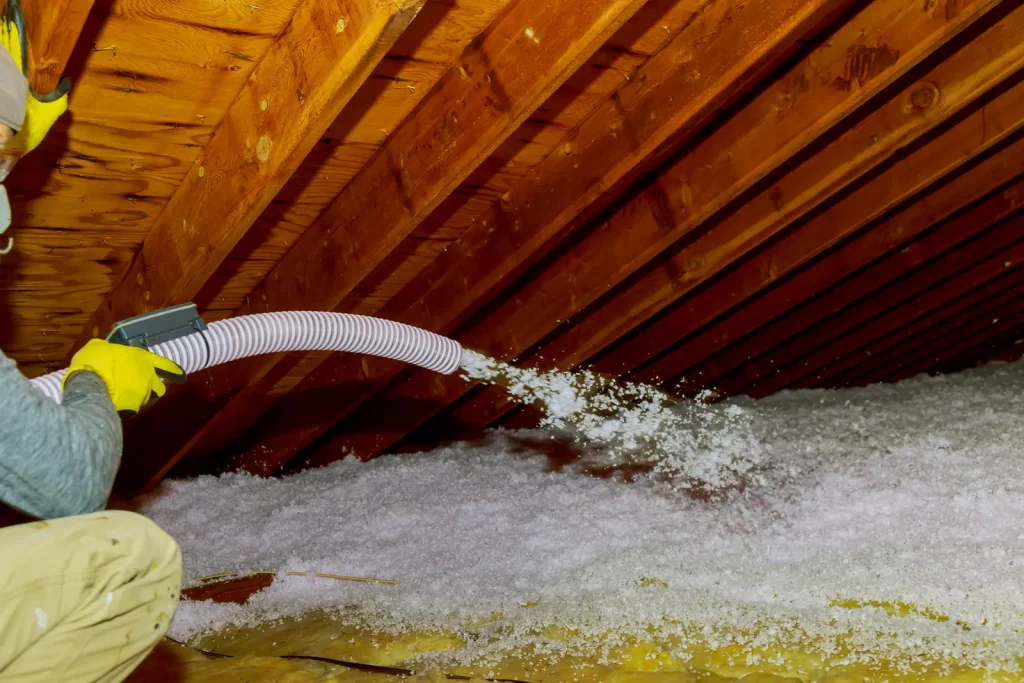
Both blow in through a hose and fill gaps. They behave differently on moisture, fire, pests, settling, and cost.
If you are adding blown-in insulation to a Rio Grande Valley attic, the choice usually comes down to two loose-fill materials: cellulose and fiberglass. Both blow in through a hose, both fill gaps around framing and wiring, and both can help you beat the Valley heat and lower your AEP Texas or Magic Valley Electric bill. But they behave differently on R-value, moisture, fire, pests, settling, and cost.
This guide compares cellulose vs fiberglass head to head so you can pick the right one for your home. Every cost here is an estimate. The only way to know your real price is a free in-home quote, because it always depends on the job.
Key takeaways
- Cellulose is denser and higher R per inch. Fiberglass sheds water.
- In leak-prone or humid attics, fiberglass is the safer pick.
- Cellulose settles more, so a good installer blows extra depth to compensate.
- Costs land close together, roughly $1.50 to $3.50 per sq ft blown in.
What is cellulose insulation?
Cellulose is made mostly from recycled paper, treated with borate for fire and pest resistance. A machine blows it into the attic where it forms a dense, tight blanket that hugs framing, wiring, and penetrations. Cellulose delivers roughly R-3.2 to R-3.8 per inch, so it packs more resistance to heat flow into each inch of depth than fiberglass does.
Because it is dense and fills gaps well, cellulose is a strong performer in the cut-up attics common across McAllen, Edinburg, Brownsville, and the rest of the Valley.
What is fiberglass insulation?
Blown-in fiberglass is made of fine spun glass fibers. It also blows in through a hose and fluffs up into a light, airy layer over the attic floor. Fiberglass delivers roughly R-2.2 to R-2.7 per inch, so it needs a bit more depth than cellulose to hit the same R-value.
Fiberglass is lighter, does not absorb water the way paper-based products can, and is a familiar, budget-friendly option for topping up an attic quickly.
Cellulose vs fiberglass compared
| Feature | Cellulose (blown-in) | Fiberglass (blown-in) |
|---|---|---|
| Material | Recycled paper, borate treated | Spun glass fibers |
| R-value per inch | About R-3.2 to R-3.8 | About R-2.2 to R-2.7 |
| Density | Dense, packs tightly around obstructions | Light and fluffy |
| Moisture behavior | Absorbs and holds moisture if it gets wet | Sheds water, does not absorb much |
| Fire resistance | Borate treated to resist fire | Naturally non-combustible |
| Pest resistance | Borate helps deter pests | Does not feed pests, offers little deterrent |
| Settling | Settles more over time, reducing depth | Settles less |
| Cost (estimate) | Blown attic roughly $1.50 to $3.50 per sq ft | Often slightly lower material cost |
Which handles Valley humidity better?
This is the big question in deep South Texas, and it is where the two materials split. Fiberglass does not absorb much water. If it gets damp from a small roof leak or high humidity, it tends to dry out and recover. Cellulose is paper based, so it can soak up and hold moisture. When cellulose stays wet, it loses R-value, can sag, and creates a spot where mold may grow.
That does not rule cellulose out. In a dry, well-ventilated attic with a sound roof, cellulose performs beautifully. But given the Valley’s tropical moisture and hurricane season, moisture control matters. If your attic has any history of leaks or condensation, we will talk through whether fiberglass, or a closed-cell spray foam moisture barrier, is the safer call for your home.
Fire, pests, and settling
Cellulose is treated with borate, which gives it real fire resistance and helps deter insects and rodents. Fiberglass is naturally non-combustible because it is made of glass, so it does not burn. On pests, fiberglass does not feed insects, but it also does not repel them the way borate-treated cellulose can. For most Valley homes both materials are safe, code-friendly choices when installed correctly.
All loose-fill insulation settles a little after install, and cellulose settles more than fiberglass because it is denser. A good installer accounts for this by blowing in extra depth so the final settled R-value still hits your target. Fiberglass settles less, so the depth you see on day one stays closer to what you get long term. Either way, the fix is the same: install to the correct settled depth, not just the initial fluff.
Cost: which is cheaper?
For most attic jobs, blown-in runs roughly $1.50 to $3.50 per square foot installed as an estimate, and the two materials land close together. Fiberglass often carries a slightly lower material cost, while cellulose can need a touch more product to offset settling. The bigger cost question is your electric bill. A well-installed attic in either material, brought up to the right R-value, can cut how hard your AC works through the long Valley cooling season. We help you weigh up-front price against long-term savings on your free quote.
Which suits a Valley attic best?
There is no single winner for every home. Here is how we usually think about it in the RGV:
- Choose cellulose. When your attic is dry, your roof is sound, and you want dense, gap-filling coverage with strong fire and pest resistance.
- Choose fiberglass. When moisture is a concern, the attic has seen dampness before, or you want a light material that sheds water and settles less.
- Consider closed-cell foam. Instead of loose-fill, when you want an air and moisture barrier built into the insulation, which is a real advantage in Valley humidity.
Both cellulose and fiberglass are proven, cost-effective ways to insulate or top up an attic. The right pick depends on your roof, your moisture history, and your budget, which is exactly what we look at during a free estimate.
Frequently asked questions
Is cellulose or fiberglass better for a Valley attic?
Both work well. Fiberglass sheds water and is the safer pick where moisture is a concern, while cellulose is denser, fills gaps tightly, and offers strong fire and pest resistance in a dry, well-ventilated attic.
Which has a higher R-value, cellulose or fiberglass?
Cellulose is higher per inch, about R-3.2 to R-3.8, versus about R-2.2 to R-2.7 for fiberglass. Fiberglass needs a little more depth to reach the same total R-value.
Does cellulose insulation absorb moisture?
Yes. Cellulose is paper based, so it can soak up and hold water if the attic gets wet. In humid or leak-prone attics, fiberglass or a closed-cell spray foam moisture barrier is often the safer choice.
Can I add cellulose or fiberglass over my existing insulation?
Usually yes, if the existing insulation is clean and dry. Blown-in is a common way to top up an attic to a higher R-value. Contaminated or wet insulation should be removed first.
What R-value do I need in an RGV attic?
Most Valley attics should target roughly R-38 or higher, in line with DOE Zone 2 guidance. We confirm the right level for your home during a free estimate.
Related reading and services
- Service: Blown-in insulation
- Cornerstone: Best Insulation for the RGV: Types Compared
- Blog: Blown-In vs Batt Insulation: Which Is Better?
- Blog: Attic Insulation: The Complete RGV Homeowner’s Guide
- Blog: Insulation and Mold: Controlling Humidity in the Valley