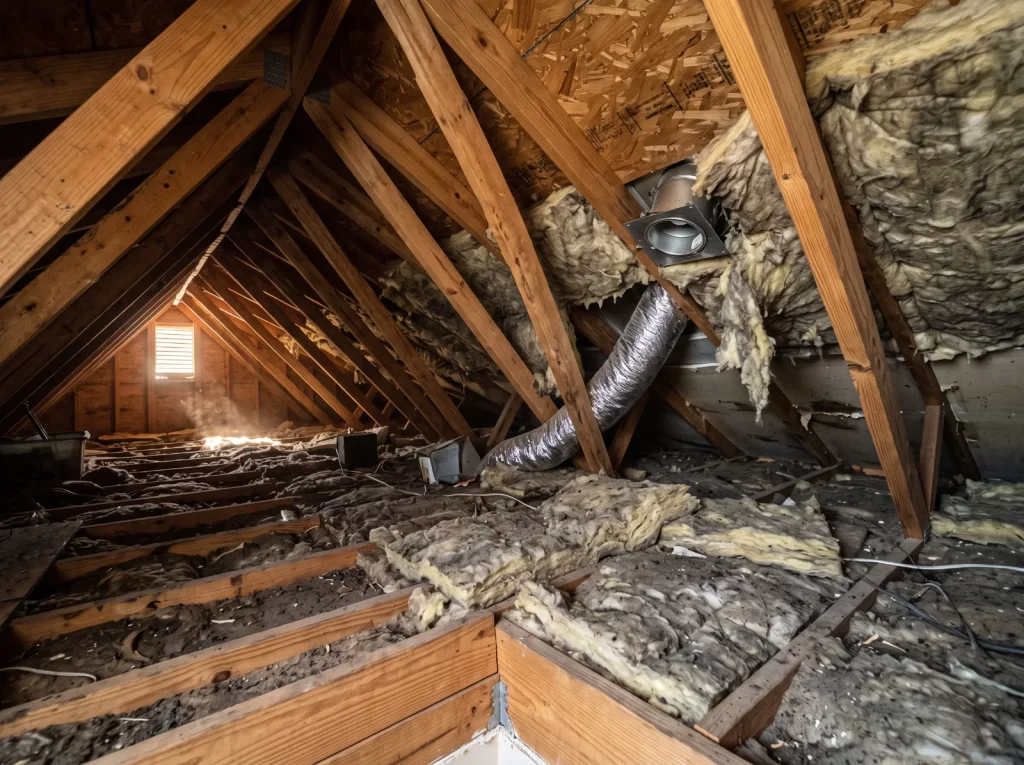
The link cuts both ways. The right insulation prevents moisture problems. Wet insulation feeds them.
The Rio Grande Valley is hot, and for much of the year it is humid too. Tropical moisture, hurricane season, and long muggy summers make moisture control one of the most important, and most overlooked, parts of keeping a healthy home in deep South Texas. When moisture sneaks into your attic, walls, or crawl space, it can lead to mold, musty odors, and damaged insulation that no longer does its job.
The link between insulation and mold cuts both ways. The right insulation, installed correctly, helps prevent moisture problems. The wrong situation, like humid air condensing on cool surfaces or wet insulation sitting for months, can feed mold growth. This guide explains how it all connects and what you can do about it in the Valley.
Key takeaways
- Mold needs moisture, food, and warmth. Moisture is the one you control.
- Condensation forms where warm, humid air meets a surface below dew point.
- Closed-cell foam acts as both air and moisture barrier at sufficient thickness.
- Moldy or soaked insulation cannot be dried and trusted again.
How are insulation and mold connected?
Mold needs three things to grow: moisture, a food source, and the right temperature. Valley homes supply plenty of warmth, and common building materials like paper facing, wood, and dust give mold something to feed on. That leaves moisture as the factor you can actually control.
Insulation plays two roles here. First, insulation and air sealing keep humid outside air from meeting cool interior surfaces where it can condense into water. Second, if insulation gets wet and stays wet, it can become a place where mold takes hold, especially paper-faced batts and organic materials. So insulation is both part of the prevention and, when things go wrong, part of the problem.
Why humidity is such a problem in the Valley
Our subtropical climate keeps outdoor humidity high for a large part of the year, and tropical storms can push moisture even higher. When that warm, moist air leaks into a cooler space, or when it touches a cold surface like an air-conditioned wall cavity or ductwork, the moisture in the air condenses into liquid water. This is the same thing that happens when a cold drink sweats on a Valley summer day.
Inside a home, that condensation can collect inside walls, on the underside of the roof deck, or around cool ducts running through a hot attic. Over time, damp spots become mold-friendly zones. Air leaks make it worse by constantly pulling humid air into places it does not belong. That is why controlling both air movement and moisture matters so much here.
How does condensation cause moisture problems?
Condensation forms wherever warm, humid air meets a surface cooler than the dew point. In a poorly sealed Valley home, that can happen in several spots:
- Wall cavities. Where cooled interior surfaces meet leaking humid air.
- Roof deck. On the underside, in an unsealed attic.
- Ductwork. Around and inside ducts passing through hot, humid attic space.
- Crawl spaces. Where ground moisture and humid air combine.
Left unchecked, this hidden moisture soaks into insulation and framing. Wet insulation loses much of its R-value, so it stops performing, and it can start to smell musty or grow mold. Catching and preventing condensation is far easier than cleaning up after it.
Can closed-cell spray foam act as a moisture barrier?
Yes, and this is one of its biggest advantages in a humid climate like ours. Closed-cell spray foam is dense and does not absorb water the way fluffy insulation does. At sufficient thickness, it acts as both an air barrier and a vapor and moisture barrier, which means it blocks humid air from getting into the assembly and reduces the risk of condensation forming inside it.
By sealing the roof deck or wall cavity, closed-cell foam keeps outside humidity out and holds conditioned air in. That controls the exact conditions that lead to condensation and mold in the Valley. It also does not provide a food source for mold the way paper-faced batts can. Closed-cell foam runs roughly R-6 to R-7 per inch and costs more than other options, but for moisture-prone areas here it is often worth it.
Open-cell foam is an excellent air barrier too, but it is more permeable to moisture, so the right choice depends on the location and the moisture risk. During a free estimate, we help you match the material to the situation.
When should you remove moldy insulation?
Sometimes prevention comes too late and mold has already taken hold, and in our humidity that happens more than many homeowners expect. In that case, the insulation usually needs to go. You should consider removal and replacement when:
- Visible mold. Insulation is visibly moldy, blackened, or covered in spots.
- Musty smell. A strong, persistent odor in the attic, walls, or crawl space.
- Water exposure. Insulation has been soaked by a roof leak, plumbing leak, or storm flooding.
- Rodent activity. Droppings and moisture often accompany mold.
- Physical failure. Insulation is matted, wet, or falling apart.
Moldy or water-damaged insulation cannot simply be dried out and trusted again. Removing it clears out the contaminated material, and it gives crews a chance to sanitize the space and fix the underlying moisture source before installing fresh insulation. Skipping the root-cause fix, like a roof leak or a humidity problem, just sets you up to repeat the whole cycle.
How to prevent mold with the right insulation setup
Preventing moisture problems in the Valley is about combining a few smart moves:
- Air seal first. Closing leaks stops humid air from traveling into wall and attic cavities.
- Right material, right place. Closed-cell foam resists water and blocks vapor where that matters most.
- Fix leaks and drainage. Roof leaks, plumbing drips, and poor crawl-space drainage all need to be addressed.
- Control indoor humidity. A properly sized, well-maintained AC system helps keep indoor humidity in a healthy range through our long cooling season.
- Replace damage promptly. Do not let wet or moldy material sit and spread.
Done together, these steps keep your home dry, healthy, and comfortable, and they protect the insulation investment you have made.
Frequently asked questions
Can insulation cause mold?
Insulation itself does not create mold, but wet insulation can become a place where mold grows, especially paper-faced or organic materials. The real driver is moisture from leaks, condensation, or our high Valley humidity. Properly installed insulation and air sealing actually help prevent mold by keeping surfaces dry.
Does spray foam prevent mold?
Closed-cell spray foam helps by acting as an air and moisture barrier, which reduces the condensation that feeds mold, and it does not provide a food source the way paper-faced batts can. It is not a cure for existing leaks, though. You still need to fix the underlying moisture source.
Should I remove insulation that got wet?
If insulation has been soaked or shows mold, it usually needs to be removed and replaced. Wet insulation loses R-value and can harbor mold and odors. Removal also lets a crew sanitize the area and repair the source of the moisture before installing new material.
How do I know if I have mold in my attic insulation?
Warning signs include a persistent musty smell, visible dark spots or discoloration, staining on the roof deck, and insulation that feels damp or matted. If you notice any of these, have your attic inspected so the problem can be identified and corrected.
Related reading and services
- Service: Insulation removal and replacement
- Cornerstone: Best Insulation for the Rio Grande Valley
- Blog: Air Sealing vs Insulation
- Blog: Open-Cell vs Closed-Cell Spray Foam
- Blog: Insulation Removal: When and Why It Is Necessary