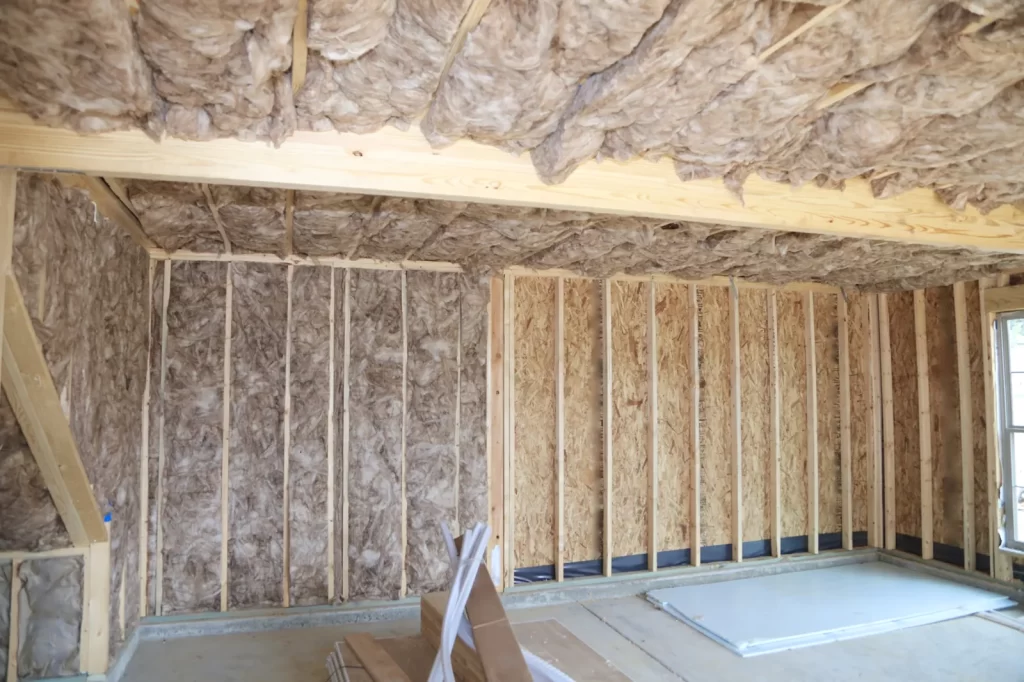
The chance to insulate the home right the first time, before drywall goes up and while every cavity is wide open.
Building new in the Rio Grande Valley gives you something a remodel never can: the chance to insulate the home right the first time, before the drywall goes up and while every cavity is wide open. Get it right and you hand the buyer a home that stays cool through the long Valley summer with a lower AEP Texas or Magic Valley Electric bill. Get it wrong and you leave comfort complaints, callbacks, and high energy costs baked into the house.
This guide walks builders and homeowners through insulating during the build, choosing spray foam versus batt, timing the work in the schedule, and hitting energy performance for the Valley heat. Costs here are estimates, and a free quote is the only way to price your specific project.
Key takeaways
- New construction is the easy setting: open walls, accessible attic, nothing to remove.
- DOE Zone 2 reference is R-30 to R-49 attic, R-13 to R-21 walls. Verify locally.
- Insulation goes in after rough-in passes and before drywall.
- Many Valley builders mix foam and batt to hit the target and the budget.
Why insulating during the build matters
New construction is the easy setting for insulation. Walls are open, the attic is accessible, and there is nothing to remove or work around. That means you can air seal and insulate more completely and more affordably than you ever could in a finished home. The decisions you make now, material, R-value, and where the thermal boundary sits, follow the home for its entire life.
In the Valley, the payoff is cooling. The climate is subtropical, with a cooling season that runs most of the year and brutal summer humidity. A well-insulated, well-sealed new home keeps that heat and moisture out, so the AC runs less and the house stays comfortable. For a builder, that is a stronger selling point and fewer warranty comfort calls after closing.
What does code require? Verify locally
The Valley falls in DOE Climate Zone 2, and energy code here focuses on keeping heat out. As a general reference, attics in this zone target roughly R-30 to R-49 (many builders go R-38 or higher), and walls target roughly R-13 to R-21. Those numbers are a starting point, not a substitute for the rules that apply to your job.
Code adoption and amendments vary by jurisdiction across Hidalgo, Cameron, Willacy, and Starr counties, and inspectors have specific requirements. Always verify the current energy code, required R-values, and any air-sealing or blower-door provisions with your local building department before you finalize the spec. We build the insulation plan around what your inspector will actually approve.
Spray foam vs batt for new builds
The two workhorses for new construction are spray foam and fiberglass batt. Both can pass code. They perform very differently in the Valley.
Batts are pre-cut and drop into open, evenly spaced wall cavities, which is exactly what new framing gives you. They deliver roughly R-13 to R-21 in walls and are the budget-friendly, familiar choice. The catch is that batts do not air seal, and their real-world performance depends on a clean, gap-free fit around wiring and outlets. Paired with careful air sealing, batts are a solid, cost-effective option for a new Valley home.
Spray foam does more than resist heat. It seals air leaks as it expands, which is a major advantage in the humid Valley. Open-cell foam (about R-3.5 to R-3.8 per inch) is a good air barrier at a lower cost. Closed-cell foam (about R-6 to R-7 per inch) is denser, adds structural strength, and acts as a vapor and moisture barrier, which helps control the Valley’s humidity and storm moisture. Foam costs more up front, roughly $1.50 to $4.50 per board foot as an estimate, but it delivers tighter air sealing and stronger cooling performance.
| Factor | Fiberglass batt | Spray foam |
|---|---|---|
| Air sealing | No, needs separate air sealing | Yes, seals as it is applied |
| R-value | R-13 to R-21 in walls | Open-cell R-3.5 to R-3.8/in; closed-cell R-6 to R-7/in |
| Moisture control | Limited | Closed-cell acts as a moisture barrier |
| Up-front cost | Lower | Higher (estimate $1.50 to $4.50 per board foot) |
| Best fit | Budget builds with careful air sealing | Homes prioritizing efficiency and humidity control |
Timing insulation in the build schedule
Insulation goes in after the home is dried in and the rough-in trades are done, but before drywall. The usual sequence is:
- 01 Framing. Framing complete and the home dried in (roof and windows on).
- 02 Rough-in. Electrical, plumbing, HVAC, and low voltage finished and inspected.
- 03 Inspection. Insulation inspection scheduled where required.
- 04 Insulation. Insulation and air sealing installed.
- 05 Drywall. Drywall goes up.
Getting the sequence right matters. Insulation cannot go in until rough-in passes, and drywall cannot go up until insulation is inspected. Foam in particular needs the rough-in fully complete, because you are sealing those cavities shut. Coordinating early keeps the trades from tripping over each other and keeps your schedule on track.
Energy performance for Valley heat
The point of all of this is a home that fights the Valley heat. Two things drive performance: enough R-value to slow heat flow, and enough air sealing to stop hot, humid air from leaking in. Batt handles the first. Spray foam handles both at once, which is why it delivers such strong cooling results here. Pairing insulation with an attic radiant barrier adds another layer of defense against the intense Valley sun.
For the buyer, that means a cooler home and lower monthly bills. For the builder, it means a more marketable home with fewer comfort callbacks.
Working with builders
We work as a reliable insulation partner on Valley new construction, from single custom homes to multi-unit and light-commercial projects. That means clear specs matched to your energy target, fast scheduling that respects your timeline, clean installs that pass inspection, and crews who answer the phone. We are licensed and insured, and we handle spray foam, batt, blown-in, and radiant barrier under one roof, so you have a single point of contact for the whole thermal package.
Frequently asked questions
Is spray foam or batt better for a new construction home in the Valley?
Both pass code. Spray foam air seals and, in closed-cell form, controls moisture, which makes it strong for the humid Valley climate. Batt is more budget-friendly and works well when paired with careful air sealing. Many builds use a mix.
What R-value do I need for a new home in the Rio Grande Valley?
As a general reference for DOE Zone 2, attics target roughly R-30 to R-49 (often R-38 or higher) and walls R-13 to R-21. Always verify the exact requirement with your local building department, since code and amendments vary by jurisdiction.
When in the build schedule does insulation get installed?
After the home is dried in and the electrical, plumbing, and HVAC rough-in passes inspection, and before drywall. Insulation often needs its own inspection first, so coordinate the timing early.
Does spray foam cost more than batt for new construction?
Yes, up front. Spray foam runs roughly $1.50 to $4.50 per board foot as an estimate, more than batt. The tradeoff is built-in air sealing, moisture control, and stronger cooling performance that can lower energy bills over time.
Can you handle commercial and multi-unit new construction?
Yes. We insulate light-commercial and multi-unit projects across the Valley, coordinating with your schedule and spec. A free quote covers the scope and materials for your build.
Related reading and services
- Service: Spray foam insulation for new builds
- Service: Commercial insulation
- Cornerstone: Best Insulation for the RGV: Types Compared
- Blog: Open-Cell vs Closed-Cell Spray Foam
- Blog: Fiberglass vs Spray Foam Insulation
- Blog: Commercial Insulation: What Valley Business Owners Should Know