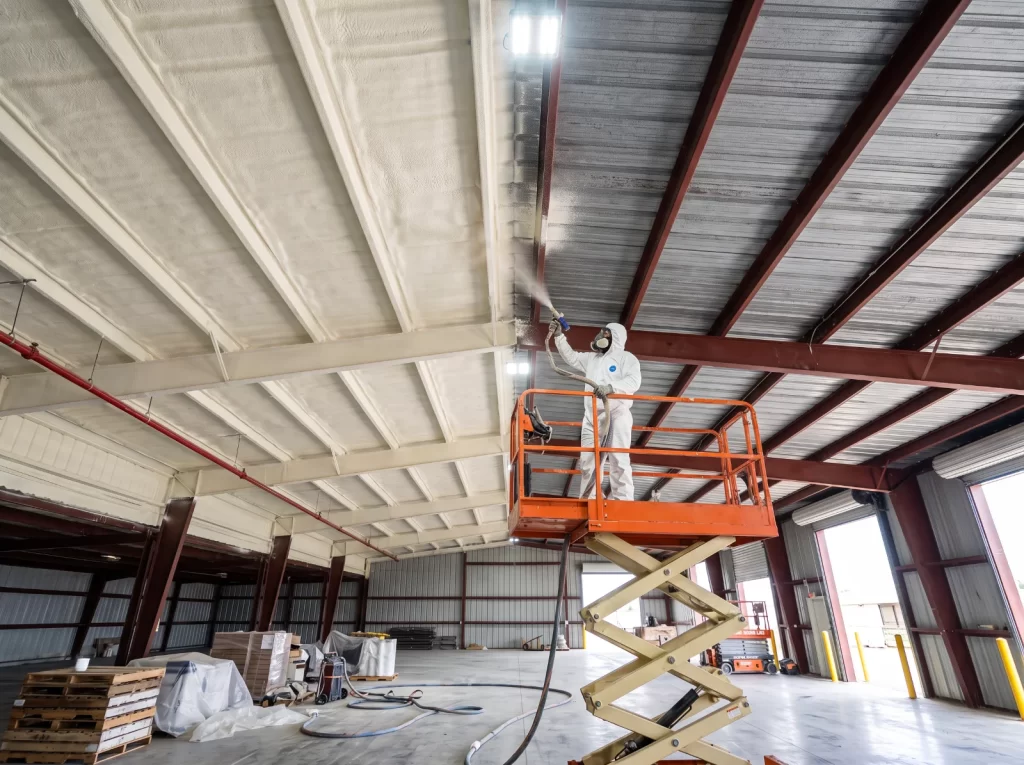
A poorly insulated building burns through money every single month.
Cooling a commercial building in the Rio Grande Valley is expensive, and a poorly insulated building burns through money every single month. With AC running most of the year and AEP Texas or Magic Valley Electric rates adding up, the right insulation keeps your interior comfortable, protects your inventory and equipment, and takes real pressure off your HVAC system. Whether you own a metal building, a warehouse, an office, or a retail space, it is one of the best investments you can make.
This guide walks Valley business owners through commercial insulation options, energy-code basics, and how to think about return on investment. If you are weighing an upgrade, it will help you ask the right questions before you get a quote.
Key takeaways
- Steel conducts heat fast, so uninsulated metal buildings bake here.
- Condensation on cool metal is a serious problem in our humidity.
- Closed-cell foam handles heat, air, and moisture in one application.
- Verify current energy code with your local building department.
Why commercial insulation is different
Commercial buildings are not just bigger versions of houses. They often have metal walls and roofs, large open interiors, tall ceilings, and specific temperature requirements for the work happening inside. A warehouse storing temperature-sensitive goods has very different needs from a busy retail floor or a climate-controlled office.
Metal buildings in particular are notorious for heat transfer. Steel conducts heat quickly, so an uninsulated metal building bakes in the Valley summer. Condensation is another challenge, and a serious one in our humid climate, since warm, moist air hitting cool metal surfaces can cause dripping and moisture problems. Good insulation addresses both heat and moisture at once, which is exactly what you want in deep South Texas.
What types of buildings need insulation?
Commercial insulation applies across a wide range of Valley properties, including:
- Metal buildings and pole barns. The most common candidates, thanks to how readily steel transfers heat.
- Warehouses and distribution. Large volumes to condition, plus inventory to protect from heat and humidity.
- Offices and professional spaces. Comfort and consistent temperatures matter for employees and customers.
- Retail stores. Stable temperatures and lower operating costs support the bottom line.
- Workshops and light manufacturing. Worker comfort and equipment protection.
If your building is hard to cool, has condensation issues, or runs up big utility bills, insulation is almost always part of the solution.
Which insulation works best for commercial buildings?
Several materials are used in commercial work, and the right one depends on the building and the goal.
- Spray foam. A popular choice for Valley commercial and metal buildings because it does several jobs at once. It insulates with high R-value per inch, seals air leaks, and, in the case of closed-cell foam, acts as a moisture and vapor barrier. Closed-cell runs roughly R-6 to R-7 per inch, adds structural rigidity, and helps control the condensation that plagues metal buildings in our humidity. Open-cell offers strong air sealing at a lower cost.
- Blown-in and batt. Blown-in works well in accessible ceilings and cavities, and it can be a cost-effective way to boost R-value over large areas. Fiberglass batts and rolls, including the faced metal-building rolls designed to go between framing and the metal skin, are common in new construction and simpler retrofits. These options can be very budget-friendly depending on the building.
For a metal warehouse fighting heat and moisture, spray foam is often the standout option. Many commercial projects use a combination of materials to balance performance and cost.
What does energy code require?
Commercial buildings are subject to energy codes that set minimum insulation and efficiency standards. In Texas, commercial construction generally follows the International Energy Conservation Code, though specific requirements and local amendments vary by jurisdiction and can change over time.
Because code requirements depend on your building type, location, and the year it was built or renovated, you should verify the current rules that apply to your project with your local building department or your contractor. New construction and major renovations typically must meet current code, while existing buildings may have more flexibility. A knowledgeable local insulation contractor can help you understand what applies and make sure your project measures up.
How do you calculate ROI on commercial insulation?
For a business owner, insulation is an investment, and the payback comes mainly through lower energy bills. Start with your current cooling costs. An underinsulated building forces HVAC equipment to run longer and harder through our long Valley cooling season, which shows up as high utility bills and more frequent maintenance. Insulation reduces that load, so your monthly savings accumulate over time and eventually offset the upfront cost.
Beyond utility savings, consider these benefits that add to the return:
- Longer HVAC life. Equipment cycles less and works less hard.
- Protected assets. Inventory and equipment shielded from temperature swings and condensation.
- Better experience. More comfortable, productive employees and a better experience for customers.
- Fewer moisture problems. Less mold and damage over time in our humidity.
Every building is different, so payback periods vary. Rather than promise a specific number, we prefer to inspect your building, review how you use it, and give you a realistic estimate of costs and expected savings. That way your ROI math is based on your building, not a generic average.
What does commercial insulation cost?
Commercial pricing depends on building size, height, construction type, the material chosen, and access. Because the scale is larger and every building is unique, cost ranges vary widely. As a rough reference, spray foam runs roughly $1.50 to $4.50 per board foot, with closed-cell at the higher end, while blown-in and batt options are typically lower.
These are estimates only. A commercial quote always depends on the specifics of the job, which is why we offer a free assessment for Valley business owners and builders.
Frequently asked questions
What is the best insulation for a metal building in the Valley?
Spray foam, especially closed-cell, is often the top choice for metal buildings because it insulates, air seals, and controls condensation in one application. It adheres directly to the metal and helps prevent the dripping that uninsulated steel buildings experience in our humid climate. Blown-in and batt options can also work, sometimes in combination.
Does commercial insulation have to meet energy code?
New construction and major renovations generally must meet the energy code in effect for your jurisdiction, while existing buildings may have more flexibility. Requirements vary by location and change over time, so confirm the current rules with your local building department or contractor before starting a project.
How long until commercial insulation pays for itself?
It depends on your current energy use, building type, and the improvements made. Insulation lowers HVAC load and utility bills, and adds value through longer equipment life and protected inventory. Because payback varies so much, we provide a building-specific estimate rather than a one-size-fits-all figure.
Can you insulate an occupied commercial building?
In many cases, yes. Depending on the material and the areas being treated, work can often be scheduled around your operations to limit disruption. We will walk your building, discuss timing, and plan the job to keep your business running.
Related reading and services
- Service: Commercial insulation
- Cornerstone: Best Insulation for the Rio Grande Valley
- Blog: Open-Cell vs Closed-Cell Spray Foam
- Blog: Does Spray Foam Lower Your Electric Bill in the Valley?